So, Christ himself gave the apostles, the prophets, the evangelists, the pastors, and teachers, to equip his people for works of service, so that the body of Christ may be built up.—Ephesians 4:11-12.
A building project is a lofty undertaking. It is far too important a project to trifle with; otherwise, why would anybody spend the time, energy, and money to build?
The builder must have a reason for building and a purpose to accomplish with what they build. They must set goals and expect a desired impact for the target demography. That raises the bar and a sense of efficiency, effectiveness, and quality. Without the expectation of a meaningful impact, the work will not receive the attention and seriousness it deserves.
In Ephesians 4, Paul talks about the building of the body of Christ onto the fulness of Christ (4:11-13).
He talks about the provision God has made for this building (Eph. 4:11; 1 Cor. 12:7-11), the purpose for the provision He has made (12), and the goal He has set for the building project (13). Paul again tells us about the expected impact God desires for the bodybuilding project.
God expects His congregation to become mature and spiritual, stable to withstand the strong winds of false doctrines taught by deceptive teachers (14). We cannot overemphasize this now, when these false teachers and their demonic doctrines abound, dressed in flashy and fancy garbs that have swept across the Christian landscape like a blinding snow blizzard. It takes discernment to know those wolves in sheep’s clothing. (Matt. 7:15). John knows this, so he admonishes us to “not believe every spirit but test the spirits to see whether they are from God because many false prophets have gone out into the world. (1 Jn. 1).
God also expects His church to become a disciplined, well-groomed, and growing church with strong Christian principles and values established on His truth and love (15). The impact of such a church upon this dark and decaying world would be remarkable and glorifying to our Lord Jesus, but are we anywhere near it? How disciplined is the church based on His word? How well-groomed are we in His perfections? Do strong biblical principles guide our plans and actions? Are our values set in His truth and love?
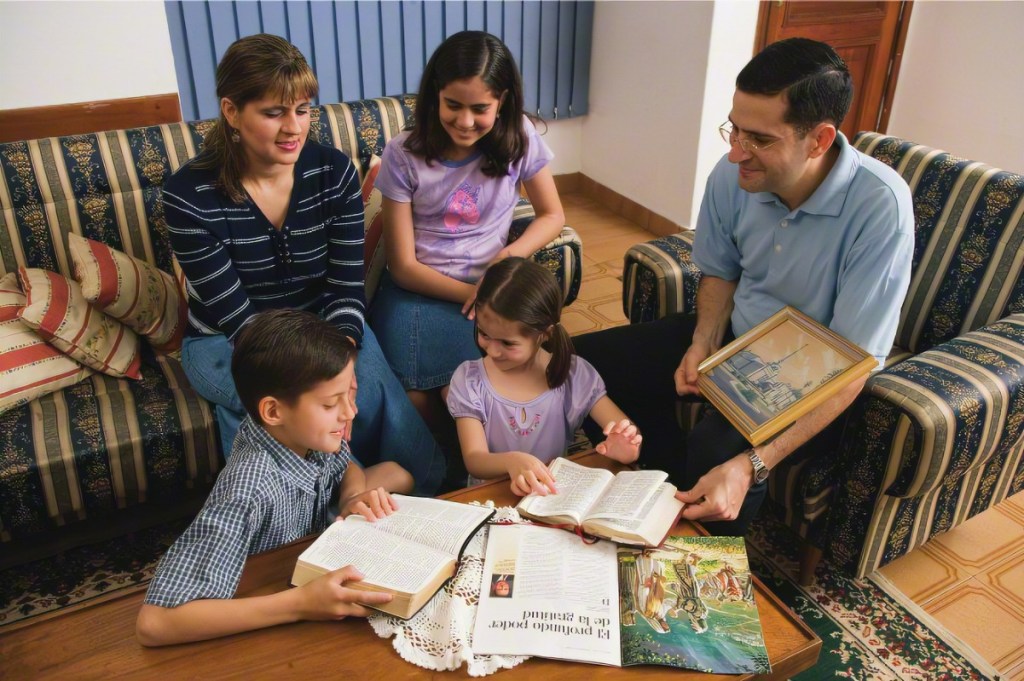
The church must evaluate itself to see how it is doing in this building project. I suggest we start with the church that meets in our homes—the family church. It takes excellent bricks to build a magnificent building in which we can feel confident in taking refuge. That is what the home church is—the church the father pastors. I am not talking about the home church that involves your neighbors, but the church with daddy and mommy as leaders and the children and house-helps as members.
How strong is the church that meets in your house, or is there any? How often does it meet and how disciplined are its bible studies, and how well-groomed are its members? Are parents and children solid on Christian principles? Do parents value truth as a belt that holds personal and family life together? (Eph. 6:14). Does love flow freely in your house church?
Blessed is your local church if your house church is that strong.
 Through the Eyes of the Spirit